
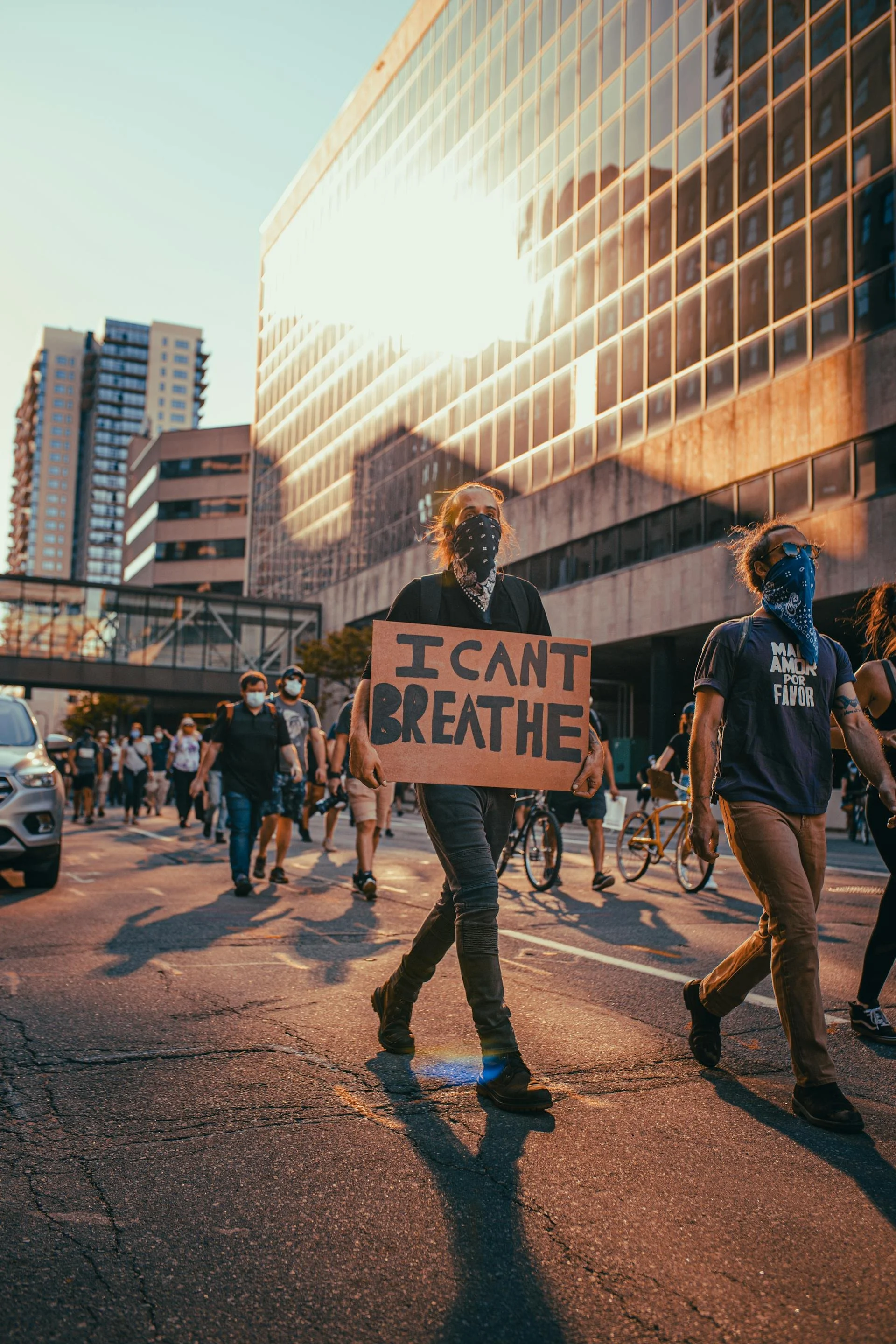
“We all understand that political trials and prosecutions are an ever-present risk in authoritarian states. In these states the judiciary is at the very least influenced by the state powers, and in some cases, completely under its control. The possibility of being arrested and convicted of a crime against the state is high, particularly if one holds a view contrary to the state and becomes an activist while trying to convince others of the view.”
Overview
The weaponization of the criminal system against Americans pursuing an inclusive, representative democracy and seeking justice and equity is not new. From COINTELPRO and the Green Scare to the “war on terror” and the targeting of Muslim people and organizations, we have seen the tenor of this repression before. And yet, today’s rising authoritarian movement - both here and abroad - have expanded local, state, and federal tools of political prosecutions in order to silence activists across a wide array of social issues, dismantle entire movements, and undermine the promise of our democracy. Paired with a political environment where repression of Justice movements is encouraged by Democrats and venerated by Republicans, we are at a dangerous turning point in our nation’s history.
According to the Carnegie Endowment for International Peace, “One of the core features of closing civic space around the world has been the weaponization of the law. Governments have cracked down on oppositional activism, free expression, and protest by enacting legislation that claims to ensure public order and national security, fend off corruption in the charitable sector, reduce disinformation, and counter terrorism or extremism. Vague and ambiguous wording often enables state authorities to use these laws to investigate and prosecute critics, all the while upholding the appearance of the rule of law.”
Across our country, individuals, grassroots formations, nonprofit organizations, and their funders are being surveilled, investigated, and prosecuted for their political activity against corporate or state interests. Political prosecutions happen under Trump and Biden administrations, in both red and blue states, and across issue and policy areas. These prosecutions also unleash reactionary media coverage and digital attacks that increasingly lead to physical political violence.. All of this lays the foundation for a growing culture of blacklisting from financial services, university housing, government aide, and hiring based on opposing political views and pending legal action.
Directing investigations against political targets and critics is part of the authoritarian playbook. Many politicians, prosecutors, and law enforcement have become part of the seedbed of an authoritarian revolution that is gaining support across partisan lines. To paraphrase the War of the Flea, the authoritarian insurgent’s ideologies and will to act against justice movements are as much “created by the political climate” as they are also “a catalyst of the popular will” toward further repression of the left.
As a result, our opposition is not just targeting protesters, high profile activists, or leading organizations engaged in First Amendment activities, but rather thinking about how to repress entire social movements and dismantle their supporting infrastructure. It is no longer just the right to protest or dissent that is under attack, but the fundamental right to organize and to participate with a cause for justice that has become the predicate crime against the state. What emerges is a guilt by association criminal theory that weaponizes aspects of the First Amendment against justice movements by allowing the government to say that activists have civil liberties, but if they exercise those rights against the “interest of the state” there will be collective punishment for all involved or suspected of association.
Liberal funders have largely sat on the sidelines and watched this trend take shape due in part to a number of issues:
- Siloed nature of philanthropy along social issues, theories of change rooted in charity not systemic transformation, and geographic interests;
- Widespread belief that our last, best hope for democracy will be the ballot box;
- Proximity to Democratic elected officials or private interests engaged in acts of state repression;
- Perpetual underinvestment in BIPOC-led movements for sustained power building.
- Lack of context and understanding of evolving threats or their scale and scope.
While perhaps unintentional, these behaviors from philanthropy have largely allowed the authoritarian movement to go unchecked and become a clear, present, and growing danger to our collective vision of an inclusive democracy.
Where we have been: US legacy of state repression of justice movements
- Racialized Violence Against Movements
- Militarization of Policing
- Changes in Technology and Surveillance
- Corporate War on the First Amendment
- Increasing Polarization and Political Violence
- Criminalization as a Tool of Authoritarianism
Where we are at: Current and evolving threats
- Bringing the Global War on Terror Home
- Justice Movements Targeted as Criminal Syndicates
- Terrorism as a Legal Framework to Repress Dissent
- Attacks on Movement Infrastructure
- Removing Bureaucratic Obstacles to Authoritarianism
Where we are headed: Warning signs and global perspectives
- Collective Liability Legal Theory
- Regulatory Attacks
- Attacking Financial Structures of Justice Movements
- Foreign Agents Laws as Tools to Repress Dissent
Where We Have Been
We cite these specific milestones and warning signs - among many that could be included but for the brevity of the document - for the express purpose of helping philanthropy understand the scale of threat, the dangerous lack of preparations against what comes next, and the gravity of consequences of continued funder inaction at this moment.
Racialized Violence Against Movements
Targeting Black-led movements is nothing new in the United States, and the response to the 2020 racial justice protests fit with the trend of tamping down aggressively on Black and Brown protesters. Defending Rights and Dissent analyzed 132 police misconduct lawsuits during the George Floyd protests in 2020: “...[b]rought by people injured, traumatized, wrongly arrested or otherwise harmed by police during the 2020 Black Lives Matter protests. We found that cities both large and small, in red states and blue, have been forced to pay out almost $150 million to protesters, journalists, legal observers, and bystanders. Cities overwhelmingly chose to settle these cases. They were unwilling or unable to defend the actions of police in court.” Excessive force was among the most frequently cited claims against police.
Officials across the country have weaponized the legal system to suppress the BLM movement in myriad ways. Following the 2020 protests, state legislators introduced 91 anti-protest bills compared to 31 the year before (ICNL-US Protest Law Tracker). These laws are not only meant to have a chilling effect on protests, but they criminalize Black and Brown people who have already experienced disproportionate surveillance, targeting, and state violence.
At the same time, we have seen a concerted, steady drumbeat against organizers for migrant rights, people advocating for and simply attempting to exercise voting rights, and most especially against those who are critical of the racist violence perpetuated by law enforcement across this country in blue, red, and purple states alike.
Militarization of Policing
Over the past three decades, the U.S. has seen a normalization of the paramilitary mindset for policing, as well as the use of SWAT teams in routine police action. As policing practices become more consolidated globally, there is increased collaboration between military operators and policing operators.
Since 1996, over $7 billion worth of military equipment has been distributed to federal, local, and state-level law enforcement agencies. Following the racial justice protests of 2020, new police facilities have been proposed or constructed in 47 states, according to the Substack newsletter “Is Your Life Better?” using local news sources. These centers signify a commitment to militarized policing strategies aimed at surveilling and repressing social movements.
According to Physicians for Human Rights, “The unnecessary and disproportionate use of force often serves not to disperse crowds and quell dissent but rather leads to acrimony and further escalation of conflict. Such uses of force often involve crowd-control weapons (CCWs), weapons ostensibly designed to inflict sublethal pain on individuals. The rising popularity of CCWs by state actors highlights alarming trends in policing across the world: growing authoritarianism, the militarization of law enforcement, unregulated and precipitous use of weapons against peaceful, unarmed people, politically biased decisions to use force, little transparency around when, how and why CCWs are used and no meaningful accountability. The result is thousands of people worldwide who have been seriously injured or killed by these weapons, and the chilling effect of this violence on millions more.”
One of the most pervasive forms of attacks against protesters of police violence is legal repression. After police escalate with violence, many protesters are charged with serious felony offenses that come with long legal battles that threaten their employment, housing, parental rights, and freedom for years.
Changes in Technology and Surveillance
Mass surveillance in and beyond the United States has expanded exponentially since the 9/11 attacks. Today it involves a complex infrastructure of federal agencies, local police, private companies, and members of the public. This “dizzyingly large and complex” architecture built to sustain post-9/11 mass surveillance lacks government transparency and makes accounting for the true financial costs nearly impossible.
Private companies sell raw location data from personal devices to local police departments, which has led to increased monitoring of racial justice protesters. According to Customs and Border Protection, during the 2020 protests the Department of Homeland Security deployed helicopters, airplanes, and drones over 15 cities for at least 270 hours of surveillance (The New York Times, 2020).
Today, lawmakers are openly seeking to use these same powers to spy on those protesting for Palestinian freedom. In a letter supporting the reauthorisation of Section 702 of FISA, legislation used to spy on private communications without a warrant, the ADL explicitly named the surveillance of student protestors as a benefit of extending the law. Just last year, government documents revealed that the FBI misused Section 702 to unlawfully query the communications of 133 Black Lives Matter protesters, part of a baseless investigation to determine whether they were subject to foreign influence.
At the same time, there is increasingly rapid sharing of information between federal and state law enforcement. Law enforcement use social media with undercover accounts and engage in monitoring of protesters and organizers. Government agencies are using data brokers to purchase sensitive information on Americans without a warrant or subpoena or sufficient justification. This is being done by side stepping constitutional and statutory privacy protections.
Outside of state or corporate surveillance - but sometimes as a result of it - doxing has become more widespread than ever and is used by actors on both the left and the right, all over the world. Political prosecutions are happening in an environment where the mere charges themselves, or even an investigation, become public quickly, and to a widespread audience. When identifying information is published, people use these lists to threaten and harass people
As a result of how things have changed in our digital world, activism itself, or being investigated or charged as a result of one’s political affiliations has far more repercussions than ever before. It’s no wonder so many protesters choose to wear masks when lifting their voices for justice, and why it’s so concerning that lawmakers are moving to make it illegal to protest with a mask on.
Corporate War on First Amendment
Corporations’ use of the courts, and potential threats of a lawsuit, to intimidate people who are exercising their First Amendment rights is not new. Organized labor has been battling litigious corporations for decades. But the use of strategic lawsuits against public participation (SLAPPs) have become an all-too-common tool for intimidating and silencing criticism through expensive, baseless legal proceedings. Corporations have paired their SLAPP suits strategy with the corporation’s use of economic and political incentives to incite repressive action by government officials against justice movements through investigations and political prosecutions.
Greenpeace has frequently noted the broadening use of aggressive prosecutorial and civil litigation claims against protesters, encouraged by the fossil fuel industry. As highlighted in their recent report:
“Since the Dakota Access Pipeline (DAPL) protests at Standing Rock in 2016, the fossil fuel industry has increasingly contributed to a pattern of escalation whereby activists—and nonactivists exercising their right to dissent—are painted as violent extremists who must be subdued. The industry’s playbook to suppress protest and dissent includes various forms of intimidation and deterrence, sophisticated public relations efforts to turn public opinion against protesters, and enforcement actions intended to pressure protesters into submission. In many cases, the fossil fuel industry has worked in lockstep with government allies: officials who may share in the industry’s ideology, but who have also benefited from its election spending, lobbying, targeted payments, and shared financial interests, or have passed through the “revolving door” from industry to government or vice versa.”
Increasing Polarization and Political Violence
Authoritarianism in the U.S. is not new. It has never been monopolized by a sole political party or represented by a single standard bearer. While there may be a consistent presence of authoritarianism throughout our history, we also recognize that there are times of spikes or waves of sustained fascistic gains. Today, we live in a time of increasing polarization, turbulent partisan realignment, and political violence. Beginning with the Tea Party movement and carrying through the rise of Donald Trump, this political climate has favored grandstanding against the left. At the same time, rampant disinformation circulates quickly, calling into question the motives of democratic institutions, scapegoating marginalized identities, and alleging a larger conspiracy orchestrating their actions. The growth and increased visibility of white nationalist figureheads, fascistic movements, and political vigilante groups have accelerated the culture war and mainstreamed ideologies that were viewed as extreme a decade ago. Unsurprisingly, the pace and scale of state repression of movements through political prosecution and law enforcement violence as well. Perhaps most troubling of all, individual voter attitudes towards authoritarianism across parties show a dangerous trend and reluctance to disaffiliate with or buck the actions of their political tribalism, no matter how undemocratic its actions
In this atmosphere, we have seen the passage of new laws removing liability for drivers running over protesters. Gov. Greg Abbot pardoned a man convicted of the pre-meditated murder of a racial justice activist at a protest. U.S. Senators have called for throwing protesters over bridges. There were more than 100 documented incidents of people hostile to racial justice gatherings in 2020 running over protesters. And the first environmental activist in the U.S. was shot and killed by police.
Criminalization as a Tool of Authoritarianism
Because our carceral system has been grown by both Republicans and Democrats, the United States imprisons a higher proportion of its population than any other nation. In the early 1970s, America’s total prison population numbered 200,000. By 2019, the number was around 2 million. Scholars like Michelle Alexander note that mass incarceration is “a stunningly comprehensive and well-disguised system of racialized social control that functions in a manner strikingly similar to Jim Crow”.
Here in 2024, projects to reduce mass incarceration are being cut and modest reforms to the criminal justice system in the past decade are already being rolled back. When it comes to investing in public defenders, the state prioritizes police, prosecutors, and prisons over the right to counsel. Between 1970 and 2015, there was a 433% increase in the number of individuals who have been detained pre-trial, and pre-trial detainees represent a larger proportion of the total incarcerated population. Meanwhile, the cash bail system criminalizes poverty and perpetuates inequities.
And, according to Pew, Americans tend to believe crime is up, even when official data shows it is down. The right wing media circus perpetuates this narrative in an effort to, among other things, prop up the cash bail industry, aided by policymakers of all political stripes who promote a copaganda narrative. American penal severity over the past 50 years has expanded through a series of policy choices – like longer sentences and a war on drugs.
With the rise of authoritarianism, the desire to criminalize marginalized populations based on identity and punish political opposition for simple actions like, for instance, civil disobedience during protest, has increased. According to ICNL, the U.S. has seen a wave of bills introduced by state and federal lawmakers that would limit the right to protest. These anti-protest bills are often introduced in response to prominent protest movements, including movements for racial justice, campaigns against new oil and gas pipelines, demonstrations on college campuses, and protests supporting better working conditions for teachers. And many anti-protest bills restrict the freedom of assembly by creating extreme penalties for common infractions connected to protests.
While the trend of new laws criminalizing First Amendment activities is deeply troubling, law enforcement and prosecutors do not necessarily require new laws to repress movements, instead they are interpreting existing laws - such as anti-lynching, RICO, or Criminal Street Gang charges - to criminalize political activism.
Where We Are
Bringing the Global War on Terror Home
Holding the throughline of criminalization of justice movements from “criminals” to “extremists” and “terrorists” is crucial to understanding how the state’s mechanisms or tools of repression have evolved in recent years as a result of the Global War on Terror.
For twenty years, the United States and allies engaged in the Global War on Terror (GWOT) in response to the 9/11 attacks. GWOT did more than provide U.S. law enforcement with military equipment and training. It fundamentally shifted how law enforcement and prosecutors philosophically understand and practically target decentralized networks of politically or religiously motivated people deemed an enemy of the state - it doesn’t matter if that group is plotting to blow up a bridge or simply protest a pipeline.
In 2008, the RAND corporation provided the U.S. government with a study called How Terrorist Groups End which argued for a pivotal shift away from the “decapitation strategy” of killing top leaders only to have them replaced by new leaders, in favor of a focus on robust surveillance-based law enforcement approach of identifying and capturing key supporting infrastructure, funding mechanisms, and the so-called “middle managers” who kept the terrorist networks functioning.
As a result, while military action in Iraq and Afghanistan made media headlines, the backbone of the work of destabilizing and dismantling terror networks such as al Qa’ida or The Islamic State of Iraq and the Levant (ISIL), also known as ISIS in western media, became policing and intelligence. Armed with expanded surveillance powers from the Patriot Act and new financial tracking abilities from the Financial Crimes Enforcement Network, the Department of Homeland Security united federal law enforcement and connected them to state and local agencies through intelligence analysis, legal theory, investigative frameworks, operational training, and of course, funding. These are the same people, tools, and techniques that are now targeting justice movements as domestic violent extremists, under the 2021 National Strategy for Countering Domestic Terrorism.
It should be noted that GWOT was a financial boon for law enforcement budgets. According to the Justice Department, the FBI counterterrorism budget alone grew from $745 million in 2002 to over $4.4 billion in 2023. In the years since the end of GWOT, FBI justification for counterterrorism spending has highlighted “Black Identity Extremists” and “domestic terrorism” as reasons for additional funding. Today, there are more than 200 Joint Terrorism Task Forces with over 4,300 officers from more than 550 local, state and federal agencies.
In order to maintain funding after GWOT, the alphabet agencies and their local counterparts are targeting a perceived enemy within.
Justice Movements Targeted as Criminal Syndicates
Increasingly, the state is advancing a national criminal syndicate theory as the basis for going after all future protesters and organizers involved in a social justice uprising. The most publicized case has been out of Atlanta. As the ACLU has noted, Georgia’s Attorney General Chris Carr charged 61 people protesting an Atlanta police training center known as “Stop Cop City” under RICO violations:
“The indictment relies on people’s beliefs and community organizing as the connective tissue for sweeping criminal liability. It devotes 25 pages to vilifying Defend the Atlanta Forest (DTAF), the grassroots movement opposing Cop City’s construction, identifying its “beginnings” in the nationwide protests against George Floyd’s murder and protests in Georgia against the police killing of Atlanta resident Rayshard Brooks, and calling out the movement’s “anarchist ideals.” It paints the provision of mutual aid, the advocacy of collectivism, and even the publishing of zines as hallmarks of a criminal enterprise. In doing so, it flies in the face of First Amendment protections for speech, assembly, and association.”
According to Carr, distributing flyers in a grocery store parking lot, attending a concert in the park, or participating in a mutual aid programs are “overt acts in furtherance of the conspiracy.” It is unprecedented for movement participants to be charged in this way and at this scale in the United States. As the state advances far-reaching criminal theories and corporations advance civil legal theories that connect our right to assemble and speak out against injustice as a crime, we see this thread track with rising authoritarianism abroad and the direction authoritarian forces are moving here.
Terrorism as a Legal Framework to Repress Dissent
All over the world, opposition to authoritarian regimes face increased obstacles as governments deploy a slew of new “antiterrorist” measures that effectively suppressed dissent. In 2022 in Ethiopia, for instance, a state of emergency granted broad powers to the security forces, allowing the arbitrary detention of anyone suspected of cooperating with terrorist groups. Members of the ethnic Tigrayan minority, whose home region is at the center of the country’s ongoing civil conflict, were often targeted. In India, Prime Minister Narendra Modi’s government has justified restrictions on nongovernmental organizations by claiming that these groups serve as conduits for money laundering and terrorist financing.
Though smearing environmentalists as eco-terrorists is not new, charges of ‘eco-terrorism’ peaked in the 90s but dissipated for the most part by 2012, only to see a resurgence as climate activism increases. As a result of protests at Standing Rock, Energy Transfer Partners — the developer behind the Dakota Access Pipeline — filed a civil suit for $900 million against Greenpeace and other environmental groups alleging acts of eco-terrorism. Former Philippine President Rodrigo Duterte made terrorism accusations by the hundreds against environmental and Indigenous rights defenders, including Victoria Tauli-Corpuz, then the U.N. special rapporteur on Indigenous rights. This year, Michel Forst, the U.N. special rapporteur on environmental defenders, cautioned the French government after Interior Minister Gérald Darmanin labeled climate protesters “eco-terrorists.” Months later, Darmanin issued a decree outlawing the climate group Earth Uprising, and French police arrested 18 of its members after several violent clashes.
According to ICNL, U.S. federal law defines domestic terrorism, but provides no penalties. Instead, the offense of domestic terrorism is state-based, and varies considerably across the country. Thirty-two states and Washington D.C. criminalize the act of domestic terrorism, while the remainder of the states do not. Most state anti-terrorism laws were enacted in the wake of the September 11 attacks, although some were enacted or amended more recently. Many state domestic terrorism laws are written in an overbroad manner that can cover activities not typically associated with “terrorism,” including in the context of protests and advocacy, raising clear First Amendment concerns.
As CCR & Palestine Legal outlined in a recent report, “Efforts to deploy antiterrorism law against advocates for Palestinian liberation are a dangerous and wrongheaded attack on constitutionally-protected forms of speech and association. They also represent the culmination of a decades-long campaign by Israel-aligned organizations, including the ADL, to wield U.S. antiterrorism laws as a weapon against the Palestinian liberation movement.” The report notes that although the 1995 Oklahoma City bombing was perpetrated by domestic extremists, the antiterrorism provisions passed in its wake – including the one criminalizing “material support” – targeted only foreign groups, with Palestinians a primary focus.
As Palestine Legal noted in its report about activism post Oct. 7:
“The tools used to attack the Palestine movement in this period were not new… Palestinians seeking to narrate their experience and protest the genocide of their people, along with their allies engaged in political dissent, were relentlessly smeared as antisemites and terrorists. Attempts to purge them from universities, schools, companies, and government institutions alike reached unfathomable proportions, as this report documents. As Biden declared the concentration of law enforcement resources on Palestine solidarity under the guise of combating potential terrorism and antisemitism, activists reported an increase in FBI and other law enforcement visits, often prompted by social media posts about Palestine. A spate of lawsuits and legislative initiatives aim to further expand already overbroad and structurally anti-Palestinian antiterrorism laws to criminalize advocacy for Palestinian rights.”
Mara Verheyden-Hilliard, an attorney and executive director of the Partnership for Civil Justice Fund, said that one of the most worrisome legal developments she’s seen since October 7 is House Republican and Democrats’ passage of a new terrorism financing bill. If it is signed into law, it would allow the U.S. Treasury Secretary to terminate the tax-exempt status of “terrorist supporting organizations.” Verheyden-Hilliard noted, “It gives virtually unfettered discretion with no due process to a political appointee of any administration to strip nonprofit status from any organization with which they disagree.”
Attacks on Movement Infrastructure
Atlanta is a frightening case study for attacks on movement infrastructure. Police raided two charities, the Lakewood Environmental Arts Foundation, which has been operating community food drives since 2014, and the Atlanta Solidarity Fund, which was founded in 2016 to raise money to pay protesters’ bail. Atlanta police justified the SWAT raids as a response to alleged “money laundering” and “charity fraud”, but they have been widely viewed as political persecution. Soon after the Atlanta Solidarity Fund raid, leaked audio surfaced of police allegedly suggesting that the arrests were politically-timed and intended to “send a message.”
Removing Bureaucratic Obstacles to Authoritarianism
Given the immense power prosecutors have been given in our criminal legal system, they can either be a catalyst of or an obstacle to political prosecutions of justice movements. Prosecutors that refuse to bring politically-motivated charges have faced informal and formal retaliation.
Last year, Florida Gov. Ron DeSantis suspended two local, elected local prosecutors because they failed to charge people with abortion-related charges and deprioritized taking some misdemeanor lawbreakers to court. Georgia is trying to establish a prosecutorial oversight commission to remove prosecutors based on their discretion, and Tennessee passed a law allowing the replacement of local prosecutors who categorically decline to bring charges. These actions infringe upon the democratic rights of voters and communities to choose their elected representatives, and they put pressure on prosecutors to come down hard on those who are simply exercising their First Amendment rights to association and speech.
Where We Are Headed
Regulatory Attacks
The widespread “formalization” of justice movement - namely the forced legal structures in order to access grant funding - have created inherent vulnerabilities and threat vectors for nonprofit organizations deemed a threat to state or corporate interests. By labeling the nonprofits operations as a criminal or terrorist enterprise - even without proof or a conviction, the organization can be targeted for regulatory punishment.
In early 2024, Texas Attorney General Ken Paxton sought to revoke the nonprofit status of a local migrant service organization for failure to turn over client records. Paxton had accused the religious group of smuggling humans across the southern border and was trying to gain access to internal records and private information. When the nonprofit sought legal advice on how to proceed in protecting its clients, Paxton retaliated.
As ICNL notes, there has been a recent flurry of investigations in the current U.S. House of Representatives that target nonprofit organizations. These investigations cross a range of issues, but create burdens and risks for the nonprofits being investigated, as well as potentially for a much broader swath of the nonprofit community.
Recently, the chairs of the House Committee on Oversight and Accountability and the House Comm. on Education and the Workforce issued a letter requesting all records of Suspicious Activity Reports filed in connection with any of 20 listed non-profit entities or their staff, including several funders of nonprofit organizations. Many civil rights group objected, citing the Committee’s articulation that it needs this info to investigate “un-American” activity – specifically, protest – on college campuses:
“It cites no specific incidents of violence or lawbreaking, nor any cause to believe that any of the 20 groups targeted have engaged in, or funded, illegal activity. In both approach and language, the letter invokes one of the more shameful periods in Congressional history: the political witch hunts led by the House Un-American Activities Committee during the Red Scare. HUAC abused its power to create blacklists of Americans suspected of anti-American political beliefs. These acts tarnished our history and trampled civil liberties. That this committee would straightforwardly invoke the HUAC-era abuse of Congressional power with seeming pride is ahistorical and deeply shameful.”
Earlier this year, the Ways and Means Committee of the U.S. House of Representative has started an investigation into justice nonprofits and financial connections to Hamas or other terrorist organizations. An initial report from the committee said, “Groups registered as 501(c)(3) nonprofits have a history of abusing the tax code to hide the activities they support and fund or the sources of their donations. One glaring tactic that was mentioned repeatedly during the hearing was “fiscal sponsorship,” a tactic where one tax-exempt organization “fiscally sponsors” a non-tax-exempt organization for certain projects, essentially allowing the other group to inherit their tax-exempt status.”
A witness before the committee testified, “The easy part, in some way, is to see what these organizations that are benefiting from this fiscal sponsorship from 501(c)(3)s, are doing. They’re promoting extremism; they’re promoting terrorism; they’re engaging in antisemitism, making Jewish communities and other communities feel unsafe. What is more difficult to see is exactly where the money is coming from.”
Collective Liability Legal Theory
The application of collective liability in the context of protest or other political activity deemed a threat to state or corporate interests is a troubling development. It opens the door for organizers, mutual aid formations, and their funders to be held liable for criminal actions or civil damages that were perpetrated by other individuals.
In December 2017, ALEC released a model bill based on the Oklahoma critical infrastructure legislation with collective liability provisions. Indiana and North Dakota enacted such bills. In South Dakota, the state controversially enacted a “riot boosters” bill that would among other things create liability for a person or individual who does not participate in a riot themselves, but “advises, encourages, or solicits” those that do.
Arkansas, Florida, Iowa, Oklahoma, and Tennessee have now passed what proponents refer to as “anti-riot laws,” with similar laws currently pending in 15 states, according to ICNL. These laws create new and heightened sentences for individuals found guilty of participating in a riot. Anti-riot laws are broad and often interpreted inconsistently, creating a wide umbrella for police officers and prosecutors to arrest and charge people participating in protests they see as undesirable. The rioting laws create a liability for just being part of a crowd.
This year, the Supreme Court declined to intervene in a lawsuit filed by a Louisiana police officer against a racial justice leader who took part in a protest at which the police officer was seriously injured. At issue is whether DeRay Mckesson can be held responsible for the officer’s injuries when he did not directly harm the officer himself but instead played a vocal role in the demonstration and, the officer said, “knew or should have known” that violence would result. (A lower court threw out the case - though the plaintiff may still appeal).
Attacking Financial Structures of Justice Movements
Since 2021, the Department of Treasury’s Financial Crimes Enforcement Network (FinCEN) has expanded its national priorities for anti-money laundering and countering the financing of terrorism (AML/CFT) to include a broader definition of domestic terrorism. FinCEN’s ability to investigate alleged money laundering and fraud among 501(c)3 organizations and surveille the incoming and outgoing transactions of foundations then provide that information to federal, state, and local law enforcement agencies or prosecutors without warrants or oversight presents a opportunity ripe for politically motivated repression of justice groups and their funders.
In the 2024 National Terrorist Financing Risk Assessment, FinCEN cited crowdfunding and online fundraising by nonprofit organizations and public charities as requiring “vigilant monitoring” to ensure “illicit fundraising posts” are quickly identified and taken down by social media companies.
Among FinCEN other strategies is to provide financial institutions with training and assessments for understanding of domestic terrorism and its associated financial activity. These directives have already been (mis)used by national banks to proactively close checking accounts of justice activists and organizations without due process or conviction of alleged offenses.
Extremism and Foreign Agents Laws as Tools to Repress Dissent
Labeling advocacy organizations ‘extremists’ or ‘foreign agents’ is an authoritarian tool on the rise, designed to manufacture threats and suppress dissent. In 2024, the former Soviet bloc country of Georgia saw the passage of a ‘foreign agent’ bill that, according to Human Rights Watch, “aims to restrict critical groups and crucial media, violate Georgia’s international obligations, and would have a serious chilling effect on groups and individuals working to protect human rights, democracy, and the rule of law.” It passed just months after Kyrgyzstan passed its own law.
Both were modeled on Russia’s law, which was expanded in 2022, “to a point at which almost any person or entity, regardless of nationality or location, who engages in civic activism or even expresses opinions about Russian policies or officials’ conduct could be designated a foreign agent, so long as the authorities claim they are under “foreign influence,” according to Human Rights Watch. It also excludes “foreign agents” from key aspects of civic life.
Nicaragua’s government deregistered over 150 organizations in 2022 using its foreign agents law, which was part of a broader crackdown on civil society. Chinese law requires NGOs to obtain government permission to conduct their activities and to register with the security authorities, along with a number of other serious restrictions that essentially make it impossible for them to operate. In Uganda, NGOs cannot operate in any part of the country unless they receive permission from the District NGO Monitoring Committee and the local government. They must also sign a memorandum of understanding with government representatives. In 2022, international human rights organizations including Amnesty International and Human Rights Watch called on the Indian government to stop applying the Foreign Contribution Regulation Act to civil society.
Late last year, Hungary’s right-wing populist government passed a law that would allow authorities to investigate and prosecute people accused of undermining the country’s sovereignty. They used the law to launch an investigation into a government watchdog group. Prime Minister Viktor Orbán’s government has also used tax audits as a tool to target independent civil society groups.
These laws are widespread, though all have their own nuances and scope. The first foreign agent law, FARA, was enacted in the U.S. in 1938 to counter Nazi propaganda. In the past year, Republicans in Congress have cited FARA in their investigations against environmental organizations. Nonprofits have warned that “FARA’s overbreadth and vagueness can undermine and chill First Amendment rights to speech and association.”
These laws also suppress political opposition, those critical of war efforts, and ban people from running for office. They target journalists and news corporations, bloggers, and even those just posting on social media.
These are not the only tools in the repression toolbox. For instance, in 2015 A law was adopted prohibiting “undesirable organizations” from operating in Russia, with criminal penalties ranging from large fines to eight years in prison. Other laws worldwide outright allow for the surveillance of human rights activists.
CASE STUDY Eastern Europe: Labeling an Entire Movement as Extremist
Extremist and Foreign Agents laws go hand in hand with attacks on the right to association, often based on sexual orientation and gender identity. Because domestic funding sources may be unavailable for LGBTQIA organizations operating in spaces that are generally hostile to LGBTQIA people’s human rights, LGBTQIA organizations are among the sectors of civil society most impacted’ by “foreign agent” laws. In 2021, Russian LGBT Network, an NGO with 17 chapters across the country, was slapped with an unscheduled audit, later charged under the foreign agents law, and eventually its parent organization – Sphere Charitable Foundation – was targeted for liquidation by the state.
The designation “foreign agent” does not automatically force organizations to cease operating in Russia, although some such organizations shut down as a result, and many people fear working with an organization registered as such. Sphere was managing to continue its work as an unregistered “foreign agent” and had to preface official communications with a warning about the label and follow many more disclosures to the government. Said the group last year about how it is adapting:
“Being named a “foreign agent” is a mark of quality in the human rights community these days, but it necessitates significant extra accountability to government bodies, and brings diminished credibility in the eyes of the general public…We still have our team, experts who have been learning to adapt to an uncertain and even dangerous environment for years, and have persevered. The outcome of the legal battle to liquidate the foundation, then, is simple. Certainly, it is now going to be that much more complicated to do our job. But Sphere as a group of those who are not ready to give up on human rights is not going anywhere.”
The organization’s fate now is unclear and any work risks criminal prosecution: In November 2023, ten years after the Kremlin adopted the first legislation restricting LGBTQ+ rights, the Russian Supreme Court issued a ruling that LGBT activists should be designated as extremists. Convictions began early this year, against a woman who wore rainbow earrings and a man who posted a rainbow flag online. Then, in March 2024, in response to a lawsuit filed by the Justice Ministry and heard behind closed doors, the Russian Supreme Court labeled what the suit called “the LGBT movement” operating in Russia as an extremist and terrorist organization and banned it, effectively outlawing queer activism.
The case was classified, and the ministry didn’t disclose any evidence, saying only that authorities had identified “signs and manifestations of an extremist nature” in the movement it seeks to ban, including “incitement of social and religious discord.” The court barred LGBTQ organizations from participating when they tried to challenge the Ministry of Justice’s petition. People convicted under the extremist law face up to 10 years in some of Russia’s harshest prisons, where queer people fear sexual violence or worse.
Noted Human Rights Watch, “The Supreme Court decision opened the floodgates to allow arbitrary prosecution of LGBT people and of anyone who defends their rights or expresses solidarity with them.” Police raids on gay clubs began the day after the ruling. Since then, two employees of a gay bar were held in pre-trial detention on accusations of organizing an “extremist organization,” and nightclubs have been shut down. Displaying the rainbow flag on social media, in private chats, or in public has been the basis for administrative fines and detention. Parties have been raided and participants beaten by police. LGBTQI centers have voluntarily shut down rather than face scrutiny. Police even raided a My Little Pony Convention.
In 2024, Russia also passed a bill that bans advertisers from working with “foreign agents,” a move widely expected to make it next to impossible for independent media outlets hit with the designation to earn money. The country was also moving towards passing legislation banning “foreign agents” from running for political office. Advocates now advise people living in Russia to stay in the closet for their own safety. Almost 40 percent of the Russian LGBT Network’s member organizations have relocated at least some members of their team abroad, generally visible activists or people in senior management.
Meanwhile, in neighboring Georgia, the Council of Europe’s Commissioner for Human Rights commented on how that country’s new foreign agent law would specifically target LGBTI civil society. And on the heels of passage of that law, a “gay propaganda” law is already being pushed that would ban any LGBTQI content in education, in media, in the arts and limit freedom of assembly for events that cause “popularisation of same sex marriages or incest.” In Bulgaria, just a week after lawmakers passed a ban on discussing LGBTQ+ topics in schools, lawmakers began a push for a foreign agents law.
Outright finds that as of 2023, out of 196 countries, including all 193 UN member states, Taiwan, the Occupied Palestinian Territory and Kosovo, LGBTIQ organizations can register and operate openly only in 94 countries. In 74 countries, LGBTIQ organizations exist but cannot register and operate openly, and in 26 countries, Outright could not identify any known LGBTIQ civil society organizations, formal or informal.
CASE STUDY India’s Ruling BJP Party Uses Criminal Laws to Target Opposition
In 2014, the Hindu Nationalist Party BJP defeated the National Congress party. Narenda Modi became Prime Minister and, with his party, began a campaign to stifle free expression across media, civil society, and politics while targeting India’s Muslim minority. Fear of speaking out against Modi is now common in public life. Freedom House, a US NGO, has downgraded the country from “free” in 2021 to “partly free” now while the Sweden-based V-Dem Institute considers India an “electoral autocracy”, alongside the likes of Russia and Turkey.
Stoking Hindu Nationalism
In states across the country, local BJP governments have passed laws restricting interfaith marriage between Hindus and Muslims. In 2019, BJP won re-election and changed the constitution and revoked long-standing self-determination rights from Kashmir, the country’s Muslim-majority state partitioned with Pakistan. BJP temporarily imposed martial law and arbitrarily detained thousands of Kashmiris, including many journalists. That year, the government also adopted the Citizenship Amendment Act, which for the first time in India makes religion a basis for citizenship. In response, spontaneous protests broke out throughout the country among millions of participants following fears that the act, together with a planned nationwide verification process to identify “illegal migrants,” could threaten the citizenship rights of the 200 million Indian Muslims. For three days, the government allowed community clashes of unprecedented violence to erupt, incited by Hindu extremists in the north of the capital.
Targeting Muslims Supporters as ‘Terrorists’ and ‘Conspirators’
What followed was a series of 2020 prosecutions targeting opposition politicians, civil rights activists, and academics under sedition and counterterrorism laws. Police arrested activist student Umar Khalid as one of the “main conspirators” under the principal counterterrorism law for his alleged role in communal violence that killed at least 53 people and injured hundreds. As of July 2024, Khalid remains in jail without bail. Other students too were arrested for allegedly ‘hatching a conspiracy’ that led to riots in the national capital and booked under the draconian Unlawful Activities (Prevention) Act (UAPA), though some did not even organize the protests and merely showed up as supporters.
Police also named academics, activists, and opposition leaders as suspects. Though supporters of the ruling BJP were implicated in the violence, none were targeted for investigation.
“Indian authorities seem increasingly determined to prosecute without basis peaceful critics of government policies for violence that, by objective reporting, is largely the handiwork of BJP supporters,” said Meenakshi Ganguly, Human Rights Watch South Asia director. “By arbitrarily arresting outspoken activists, the government is not only attempting to silence dissent but also sending a message to supporters that they have free rein to commit abuses against minority communities.”
As Human Rights Watch and others have also documented, the authorities have shown clear bias in the investigations, arresting peaceful protesters and filing charges, without evidentiary support, of sedition, murder, and terrorism under the Unlawful Activities (Prevention) Act, accusing them of a “conspiracy” to “defame the country in the international arena.”
Strangling Free Speech
The government weaponizes a number of laws to attack free speech. In 2019, India’s BJP used a British colonial defamation law to kick its primary opponent, Rahul Gandhi, out of Parliament for a joke viewed as critical of PM Modi, the day after a two-year prison sentence was imposed by a judge. (The Supreme Court eventually stayed the judgment).
In 2021, 21-year old climate activist, Disha Ravi, founder of Fridays for the Future, a global movement begun by climate change activist Greta Thunberg, was charged under a controversial colonial-era sedition law – a section of the Indian Penal Code which criminalizes any action that “excites or attempts to excite disaffection towards the government”. She was arrested after sharing a document intended to help farmers protest against new agriculture reform laws. The punishment can be a fine or a maximum sentence of life in prison, or both. The law has been invoked for the liking or sharing of a social media post, drawing a cartoon or even the staging of a school play. Freedom House noted data suggesting a 28 percent increase in sedition charges between 2014 and 2020.
In 2022, the government announced changes to its information technology rules whereby a government panel will be formed to hear complaints from users about content moderation decisions by social media platforms. This effectively gives the government control over the content moderation decisions that social media companies make.
Tax Investigations
The tool most often wielded by the government against NGOs is the Foreign Contribution Regulation Act (fFCRA). Passed in 1976 to limit any unwelcome “foreign hand” in India’s affairs, it allows the government to deny NGOs foreign funding. Approximately 17,000 civil society groups in India have had their licenses to receive overseas donations canceled since 2014 after the government tightened surveillance on non-profit groups regulated under the FCRA. Most fit into two categories. The first is non-Hindu, faith-based NGOs. Hindu outfits are rarely or never attacked, according to the Economist. The second group is those considered to be BJP’s ideological opponents – any group with ties to the Congress Party.
In 2015, the Union ministry of home affairs (MHA) suspended Greenpeace India’s foreign funding. The MHA claimed that the environmental NGOs registration had been canceled because Greenpeace had “prejudicially affected the economic interest of the state.”
Authorities froze Amnesty’s bank accounts in 2020 for allegedly receiving foreign funds illegally, a charge the rights group denied. The organization said it had been forced to lay staff members off and pause its work in India because it could not access its funds, and accused the government of “incessant witch-hunt” and “constant harassment.” This was after Amnesty released a report on human rights violations committed by the Delhi police during the religious riots.
Human rights defender Harsh Mander, who runs a think tank called Center for Equity Studies, has dedicated his life to fighting sectarianism and defending Muslims, bringing to light the anti-Muslim programs of 2002. Mander was raided by agents from the Central Bureau of Investigation (CBI), India’s equivalent of the FBI, under suspicion of receiving foreign funds illegally. Although never formally charged in court, in 2023, the Ministry of Home Affairs decided to suspend the think tank’s license to receive foreign contributions. Deprived of resources, Mander is trying to keep his research center alive through crowdfunding to avoid layoffs – four employees today, compared with over a hundred previously – and continue to support victims of hate crimes.
In 2023, the Center for Policy Research (CPR), one of the country’s leading research centers founded 51 years ago, laid off almost all its 200 members after the Interior Ministry revoked its license.CPR was accused, like Mander, of violating the Foreign Contribution (Regulation) Act (FCRA), using its funds for “undesirable” purposes and carrying out actions likely to harm the government’s economic interests. Also that year, the federal investigating agency refused renewal of Oxfam India’s Foreign Contribution Regulation Act (FCRA) registration, alleging the charity had violated the country’s foreign funding regulations. This means that Oxfam India will not be able to receive foreign funds for any of its humanitarian work in India.
Attacks on Journalists
Indian journalists, especially from the region of Kashmir, have been incarcerated on terrorism charges or forced to self-censor. Elsewhere in the country, journalists’ homes have been raided and some have been charged with money laundering and income tax evasion. In 2023, about 50 officers from India’s income tax department descended on the BBC’s offices in New Delhi and Mumbai to carry out “tax survey”, which continued for three days.
This followed BBC’s airing of a documentary that gave new details about the role Modi played as chief minister of Gujarat in the communal riots that ripped through his state in 2002 and left more than 1,000 people, mostly Muslims, dead. The BBC had found a document by the British government that said Modi was “directly responsible” for not stopping the killings of Muslims during the riots, and said the violence had “all the hallmarks of genocide”.
It was revealed that in the raid by Indian tax authorities, phones and laptops were cloned and at least 10 members of BBC staff were kept for questioning overnight. According to a statement released after the raid was completed, the officers had uncovered “irregularities and discrepancies” in the BBC’s taxes.
“Authorities have used security, defamation, sedition, and hate speech laws, as well as contempt-of-court charges, to quiet critical voices in the media,” noted pro-democracy watchdog Freedom House. “Activists, Muslims, and members of other marginalized communities are routinely charged with sedition for criticizing the government and its policies.”
The above examined are just a sampling of the ways that the Modi government has used authoritarian tactics to target civil society in Indian that is critical to the government. But the fear being instilled in opposition to the BJP government isn’t limited to the borders of the country. Vocal critics of Modi say the Indian government has also reached across the Pacific Ocean to harass them on American soil, and to harass their family members who still live in India.

